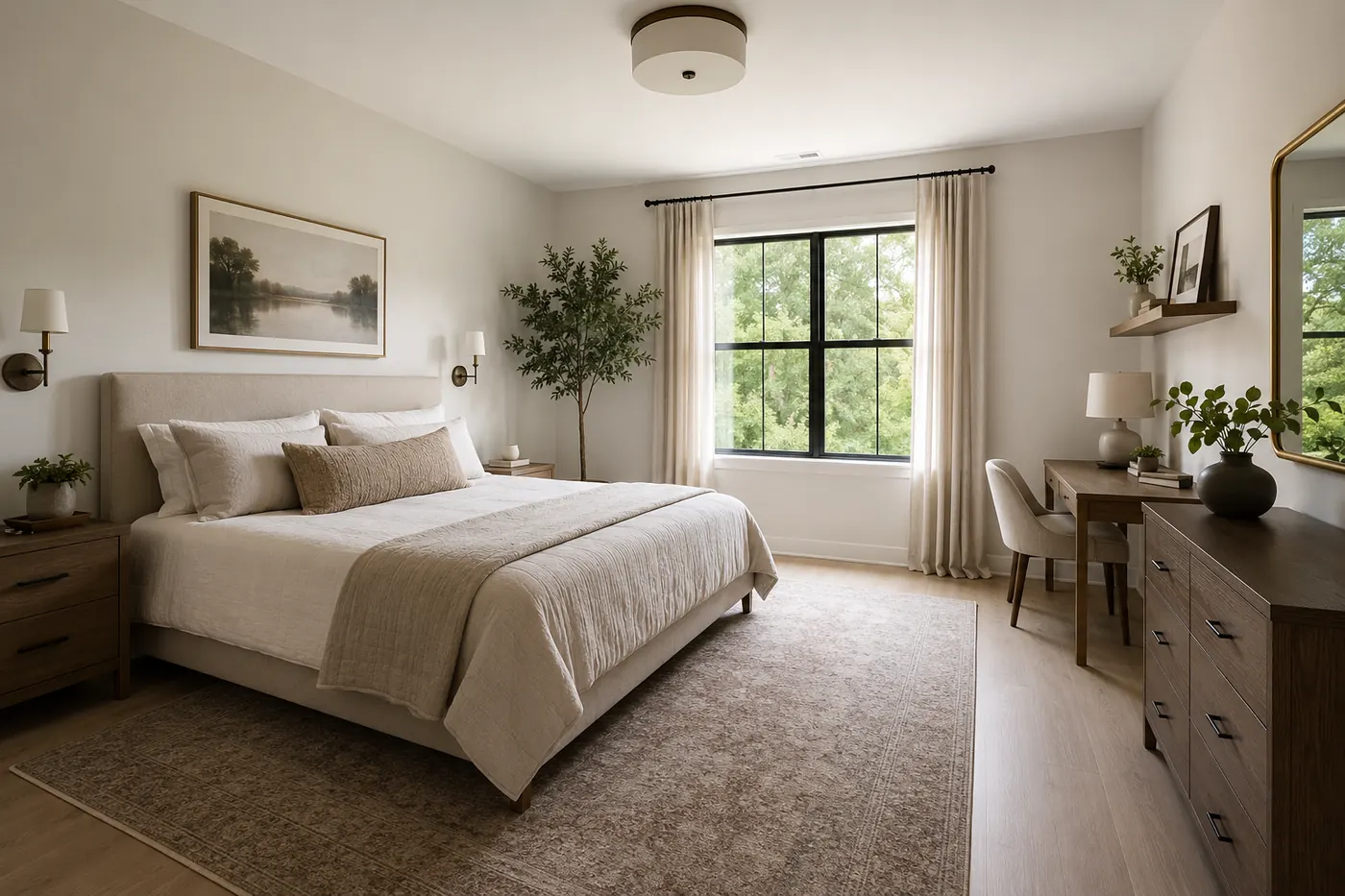
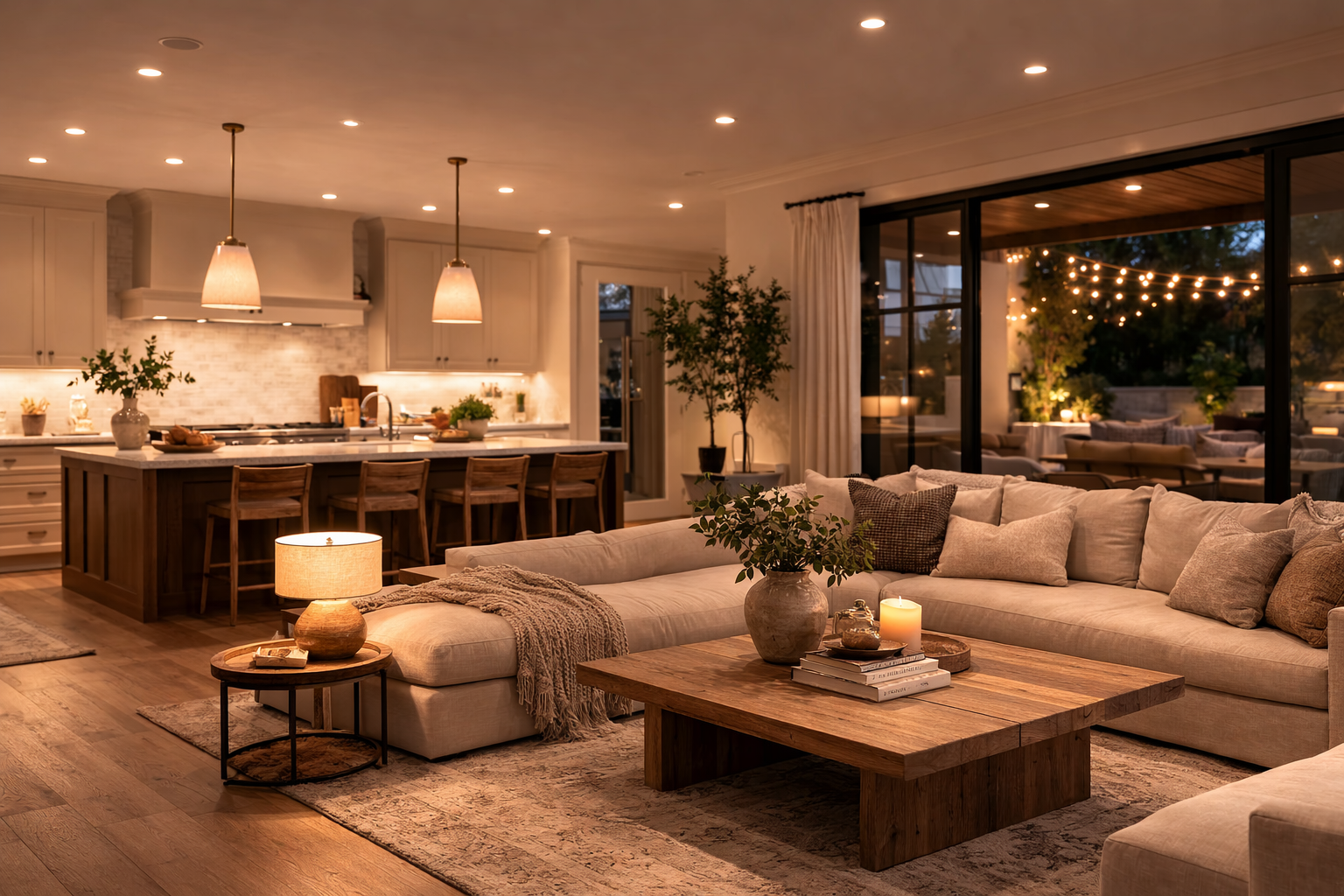
Some spaces feel calm and refined the moment you walk in.
After years around real estate and property management, I’ve learned to pay attention to the details people feel before they can name them.
If you’re building, remodeling, or simply collecting ideas for “someday,” recessed lighting layout is one decision worth noticing before it becomes permanent.
It is one part of a much larger conversation about how we’re thinking through lighting decisions before building , because fixture placement becomes much easier to evaluate when we think about it before construction makes those choices difficult to change.

Right now we’re still in the pre-build phase — land cleared, binders in progress, contractor conversations happening — which means this is exactly the moment to slow down and think about lighting layout before anything gets locked in.
Because once rough-in happens, lighting decisions tend to follow the default. And the default isn’t always what makes a space feel gracious or relaxed.
Once lighting is in the ceiling, the default becomes surprisingly permanent.
Recessed lighting is one of those choices that can seem small during planning, but it shapes how a room feels every night for years.
Once you notice it, you see it constantly.
Perfect rows of recessed lights spaced evenly across the ceiling — clean, predictable, efficient.
It makes sense from a construction standpoint:
But from a living standpoint, it often creates rooms that feel:
I’ve walked through many homes where nothing was technically wrong — and yet the room never quite relaxed.
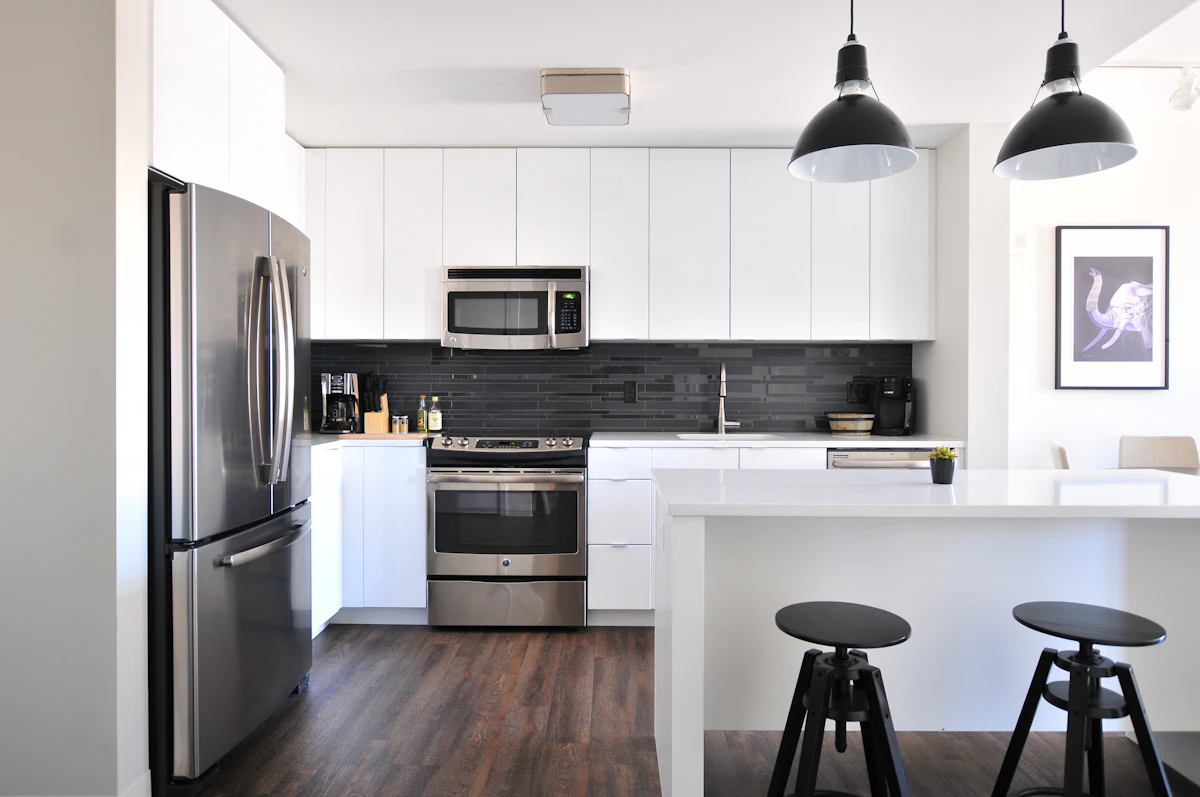
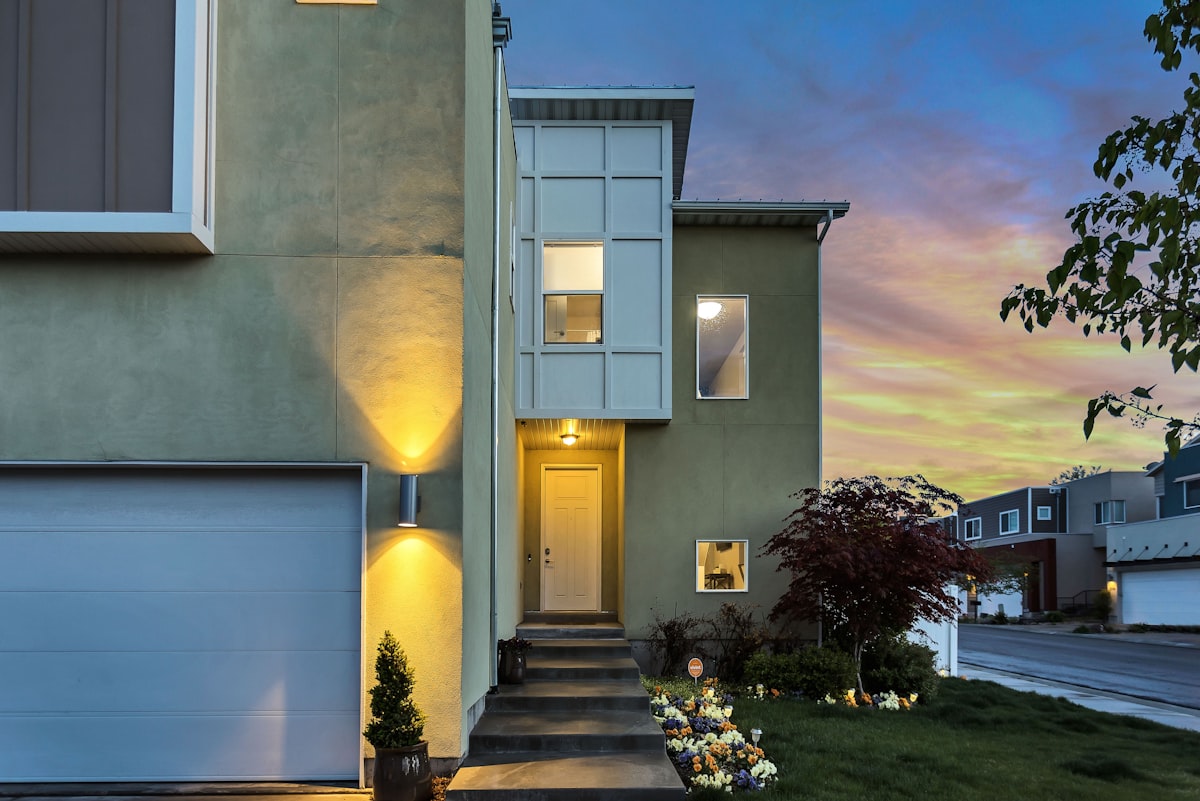
Rooms aren’t experienced in perfect grids.
People gather in certain areas. Furniture anchors spaces. Lamps create softness. Conversations happen in specific zones.
So instead of asking:
“How many lights fit in this ceiling?”
we’re trying to ask:
“Where does light actually support the way we live?”
That small shift changes everything. Lighting starts to feel intentional instead of automatic.
That is also why lighting makes more sense when it is considered together with the layout decisions that quietly define a well-designed home . Furniture placement, circulation, sightlines, and room function all influence where light is actually useful.
One thing I consistently notice in spaces that feel quietly luxurious is restraint.
They rarely rely on excessive overhead lighting. Instead, they feel calm because lighting is doing just enough — not trying to do everything.
We’re leaning toward:
When every inch of the ceiling glows equally, the room loses depth.
That sense of restraint connects with what we mean by the quiet luxury of designing a home around real life : choosing details for how they support daily life rather than simply adding more.
That desire for less visual interruption also connects with our thinking about designing photo-friendly walls . Lighting, outlets, switches, furniture, and wall composition all affect whether a room feels visually calm once everything is finished.
Lighting plans are usually reviewed during the day — on paper, under bright light.
But homes are lived in at night. That’s when lighting either supports relaxation… or works against it.
We’re thinking about:
Next time you stay somewhere that feels especially refined or relaxing, look up. The lighting usually isn’t doing too much.
Recessed lighting works best as one layer — not the entire plan.
We’re thinking about combining:
Layering creates energy when you want it and calm when you need it.
The U.S. Department of Energy Consumer Guide to Energy-Efficient Lighting also recommends making use of dimmer switches when full lighting is not required, reinforcing the value of having more control over how much light a room receives at different times.
Some of the most expensive homes I’ve seen felt surprisingly uncomfortable — not because of finishes, but because lighting was treated like a checklist.
And some of the most gracious spaces felt effortless simply because light was placed thoughtfully.
That’s the difference we’re trying to think through now — before drywall makes decisions permanent.
Lighting is also only one of the systems that becomes much harder to change after this stage. That is why we’re separately thinking through the electrical decisions you only get one chance to make before drywall .
Lighting layout feels small during planning. But it quietly shapes how a home feels for years.
Right now, while everything is still flexible, we’re trying to design for real living — not just a clean blueprint.
Because lighting is one of those things people don’t always notice consciously… but they absolutely feel.
The same early planning applies to outlet placement , because both lighting and power work best when they are coordinated with the way furniture and rooms will actually be used.
After years of walking through homes, I’ve learned that the details people feel most are often the ones they don’t immediately see.
Have you ever stayed somewhere that felt instantly calm or refined — and later realized the lighting was part of the reason?