
Hospital Cafeterias: An Affordable, Low-Stress Dinner Option Families Overlook
A simple alternative to fast food — and a calmer way to see your local hospital outside of crisis.
When families are deciding what to do for dinner — especially on busy afternoons or early evenings — the default options are often fast food, takeout, or skipping a real meal altogether.
But there’s another option that rarely makes the mental list: the hospital cafeteria.
Depending on the hospital, cafeterias can offer an affordable, convenient, and surprisingly calm place to eat — especially for families who want something more substantial than fast food without committing to a full sit-down restaurant.
And beyond the food itself, eating there can offer families a low-pressure way to experience an important community institution outside of stress or emergency.
Food Designed for Function, Not Performance
Hospital cafeterias generally aren’t trying to be trendy dining destinations. Their primary purpose is practical: feeding staff, visitors, families, and others moving through demanding days.
That function-first approach can be refreshing when what you really need is a straightforward meal with enough variety to satisfy different people.
Salad Bars That Are Actually Built Out
Many cafeterias have well-established salad bars with practical, filling choices — the kind of build-your-own meal that allows different family members to create something that works for them.
- Garbanzo beans
- Black olives
- Green peppers
- Mushrooms
- Chopped egg
- Dried cranberries
- Mixed greens and vegetables
If your family enjoys meals where everyone can customize what goes into the bowl, you may also enjoy our Southern Salad review, another example of a casual meal built around choice, fresh ingredients, and build-your-own options.
Multiple Stations Beyond a Standard Hot Bar
Depending on the hospital, the cafeteria may be much more than one buffet line. You may find several food stations, such as:
- Grill stations with burgers, sandwiches, and different toppings
- Hot bars with baked chicken, meatloaf, vegetables, and familiar comfort foods
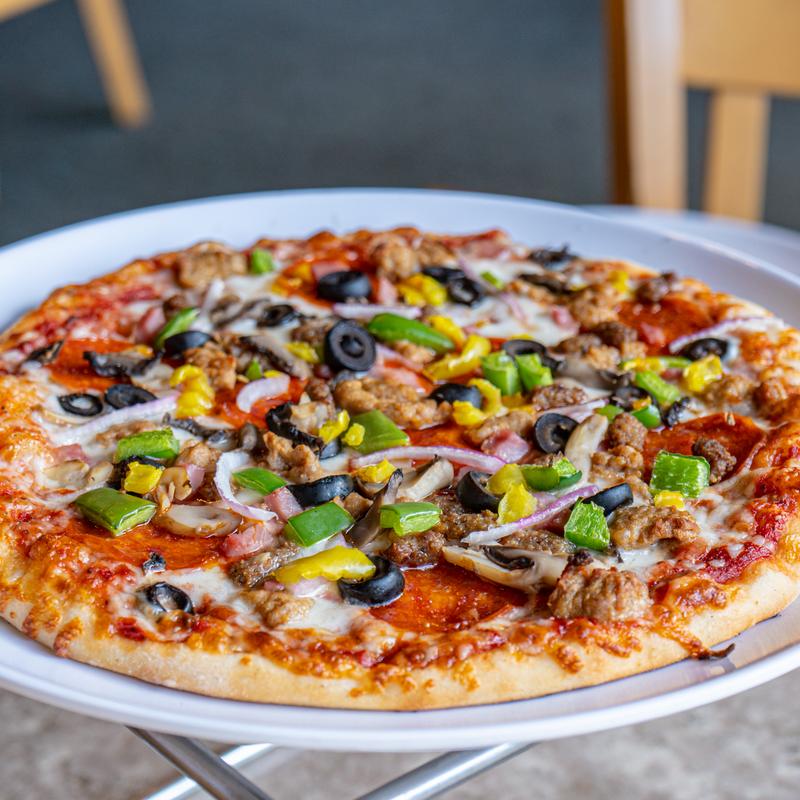
- Rotating stations featuring options such as tacos, pasta, or pizza
- Soup stations alongside lighter meals
The appeal is choice without too much complication. Families can often find enough variety to accommodate different preferences without navigating a long restaurant menu or a more formal dining experience.
That same balance between variety and casual convenience is one of the reasons we enjoyed East Bay Deli, where families can order quickly while still choosing from sandwiches, salads, desserts, and other familiar options.
An Important Clarification: Cafeteria Food vs. Patient Food
It’s also worth making an important distinction: cafeteria food may be very different from the meals served directly to patients.
Patient meals may need to follow specific dietary orders, medical restrictions, texture requirements, or other individualized needs. Cafeteria food, by contrast, is generally intended for staff, visitors, and other members of the public and may offer considerably more flexibility and customization.
So a family’s impression of the cafeteria should not necessarily be used to judge what a patient receives during a hospital stay — they serve different purposes.
An Environment That Can Feel Less Rushed
One reason a hospital cafeteria can work surprisingly well as a “what do we do for dinner?” option is the environment.
Depending on the facility, cafeterias may offer several types of seating:
- Small tables
- Larger tables for families or groups
- Booths
- Open seating areas
During quieter periods, the atmosphere can feel noticeably different from a crowded fast-food restaurant. Conversations happen, people come and go, but there may be less music, fewer distractions, and less pressure to move through the meal quickly.
Families who appreciate calmer places to sit may also like our Goat Kick Coffee review. One of the things we noticed there was how the environment itself can determine whether a stop feels better for settling in or simply grabbing something quickly.
Cook-to-Order Food Without the Formal Restaurant Experience
Some hospital cafeterias also offer cook-to-order stations. Instead of relying entirely on food that has been sitting on a buffet, diners may be able to request a sandwich, burger, omelet, or another simple dish prepared when ordered.
For families, that can provide a useful middle ground: more flexibility than grabbing prepackaged food, but without the time commitment or expense that can come with traditional table service.
If affordability and straightforward family dining are priorities, our Just Julie’s Sandwich Shop review explores another casual option where reasonable prices, fresh food, and efficient service make the experience easy for families.
Demystifying and Humanizing Hospitals Through Everyday Exposure
Eating at a hospital cafeteria doesn’t just help solve dinner. It can also give families a chance to become familiar with a local hospital during an ordinary moment rather than only encountering it during an emergency.
For school-aged children, an ordinary visit can also provide a quiet glimpse into the many different kinds of work happening inside a healthcare environment.
- Food service and nutrition teams preparing meals
- Nurses, physicians, technicians, and support staff taking breaks
- Administrative and operational teams moving through their workday
- Families and visitors navigating the hospital in everyday ways
The goal doesn’t have to be turning dinner into a lesson. Sometimes simply seeing an institution functioning during a normal day can make it feel less unfamiliar.
Seeing Hospitals Outside of Crisis
This post isn’t suggesting that hospitals are perfect, or that eating in a cafeteria tells you everything you need to know about a health system.
Every community has stories about its hospitals. Some experiences are positive, some are frustrating, and some take place during extremely stressful moments when emotions and consequences are understandably much greater.
A casual cafeteria visit simply provides a different perspective: a chance to observe the environment when you are not in the middle of an emergency.
You may notice how people interact, how the building functions, how busy different areas feel, and how staff and visitors move through the space.
Holding Imperfection and Good at the Same Time
Like any large organization, hospitals are shaped by human decisions, resources, staffing, leadership, processes, and constraints.
Systems can fall short, and those shortcomings can have real consequences for patients, workers, and families.
At the same time, an enormous amount of important work happens inside hospitals every day:
- Emergency departments responding to urgent medical needs
- Labor and delivery teams caring for parents and newborns
- Surgical teams performing procedures that may improve health and function
- Nurses and support staff carrying significant responsibility throughout long shifts
Both realities can exist at the same time. Recognizing the complexity of a system does not mean ignoring its problems — it simply allows us to observe it with more context.
From Observation to Thoughtful Community Engagement
If your local hospital system isn’t one you feel particularly connected to, an ordinary visit can also be a starting point for learning more about how the organization interacts with its community.
- Look for patient experience or guest services information
- Share specific feedback when something stands out — positive or negative
- Learn which departments handle community questions or concerns
- Explore volunteer or community-support opportunities if they interest your family
This isn’t about making a statement. It’s about informed presence — seeing a community institution outside of crisis and then deciding for yourself whether and how you want to engage with it.
A Note on Teams and Systems
Questions around staffing, morale, leadership, communication, and process improvement aren’t unique to hospitals. They exist anywhere people are serving others under pressure.
Much of my professional work focuses on helping teams improve communication, clarify roles, and strengthen systems so outcomes improve for both workers and the people they serve. If you’re interested in learning more about successful teams, operations, and better outcomes for customers and clients, you can learn more at EfficiencyPlan.com.
When This Makes Sense
This isn’t meant to turn a hospital into a destination restaurant or suggest driving long distances simply to eat in a cafeteria.
It makes the most sense as a local, practical option — especially when a hospital is already close to home or along a route your family regularly travels.
On those afternoons when the choice feels like fast food, takeout, or “I have no idea what to make,” remembering that another option exists can simply make family life a little easier.
If what you really want is a cozy café rather than a cafeteria, our Bodega Ultima review offers another perspective on how food, atmosphere, cleanliness, and a comfortable environment can turn a simple meal into a more enjoyable pause in the day.
Final Thought
Eating at a hospital cafeteria isn’t an endorsement of the entire hospital system. It’s simply a practical and often overlooked meal option — and an opportunity to experience an important community institution during an ordinary moment rather than only during one of life’s hardest ones.
Sometimes becoming more familiar with a place begins with something as simple as sitting down, eating dinner, and paying attention.
Join the FamilyCritic Conversation
Have you ever eaten in a hospital cafeteria when you weren’t there for an emergency? What stood out most — the food, the environment, the people, the price, or simply the feeling of the space?